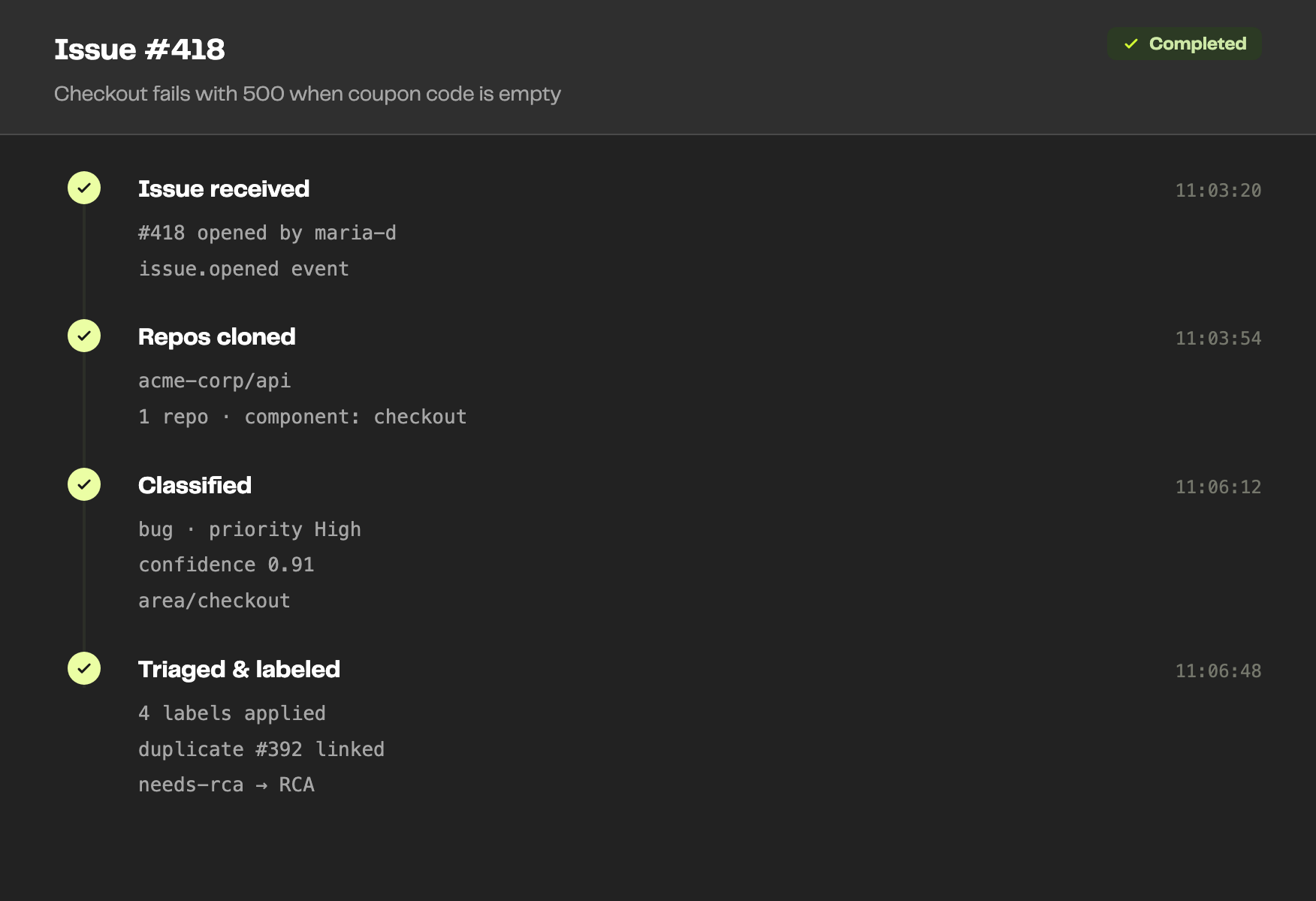
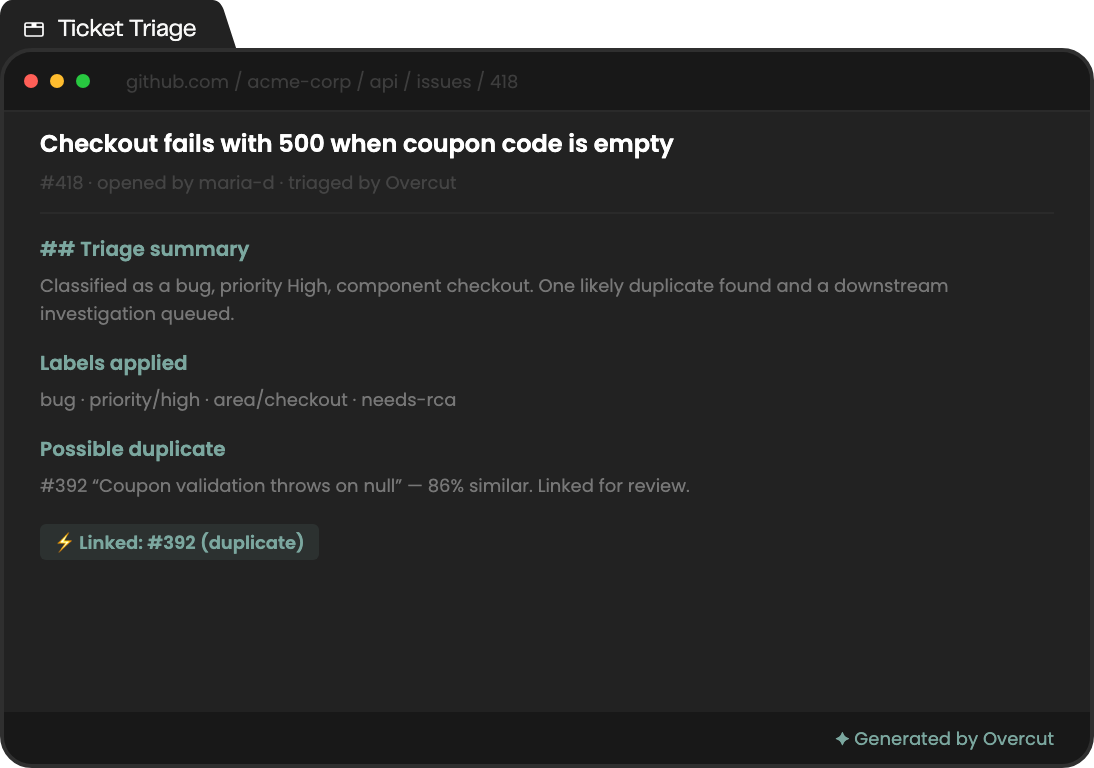
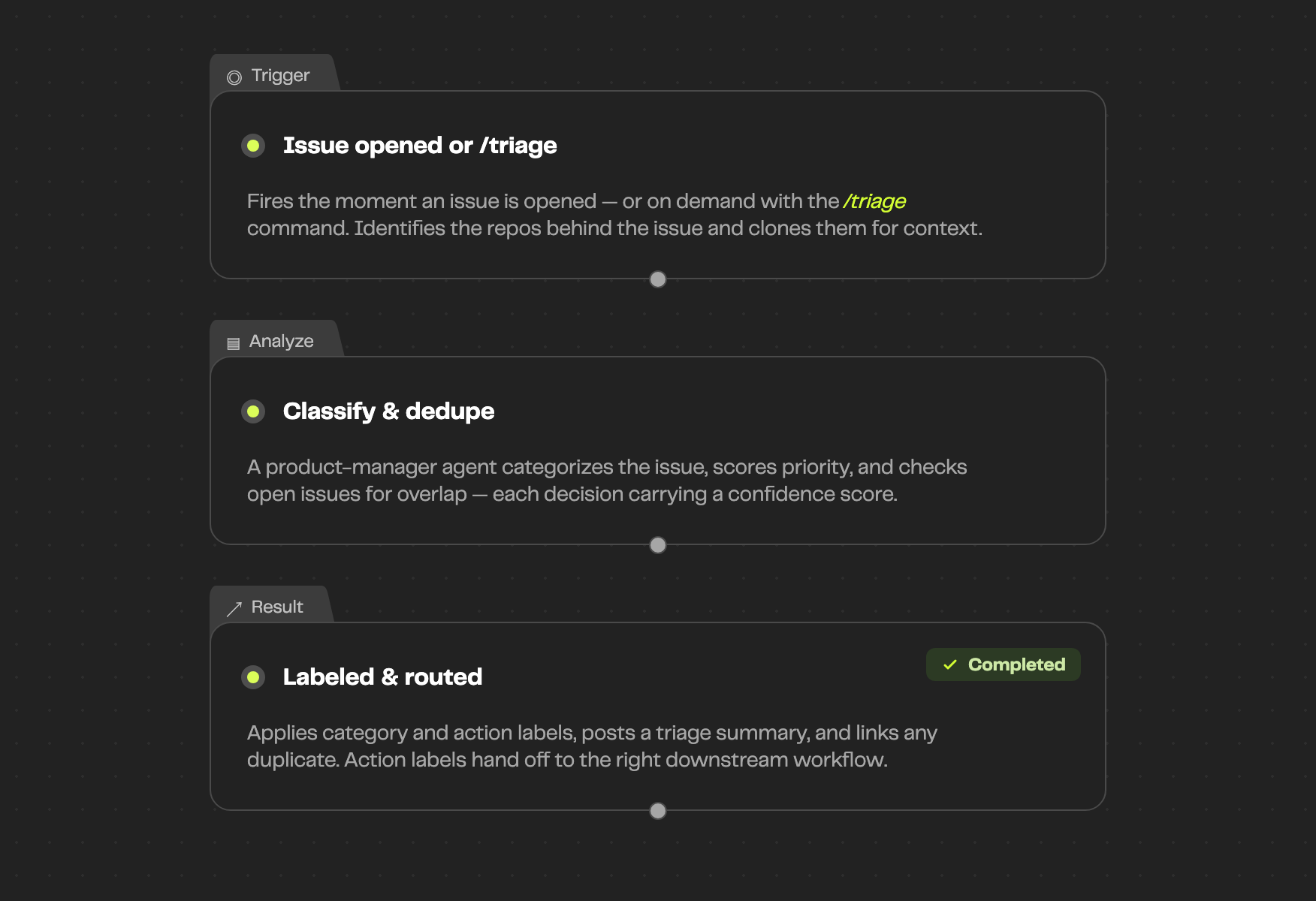
Three steps to a sorted backlog
Overcut identifies the repos behind an issue, clones them for context, then runs a product manager agent that categorizes, prioritizes, detects duplicates, and posts a clear triage summary.
The edge cases, covered
Classification comes with confidence scoring, and lightweight tickets are spared from triggering automation they don't need.
Classification + action labels
Applies category labels like bug, feature, or question, plus action labels such as needs-rca that hand off to the right workflow.
Confidence-scored decisions
Every classification carries a confidence score, so only well-supported labels are applied to your issues.
Duplicate detection
Spots issues that overlap with existing ones and links them, cutting noise and keeping the backlog clean.
Requests missing info
Detects incomplete reports and asks for the specifics needed before an issue can be actioned.
Spares lightweight tickets
Tickets already tied to a PR or pre-labeled get classification only — no unnecessary automation is triggered.
Bridges tracker and code
Triages issues in your ticket system even when the code lives elsewhere, pulling repo context to classify accurately across systems.


Running from day one
Triggers automatically the moment an issue is opened, or on demand with the /triage command on any existing issue.