Agentic Workflow
Using an AI agent today usually means opening a tool, choosing an agent, pasting in context, and deciding what to do with the result. Every run is a one-off, and the developer is the one wiring the steps together. An agentic workflow removes that manual wiring. It is a process you define once and run many times: an event starts it, agents do the work step by step, and a person approves the parts that need judgment.
Overview
An agentic workflow is the unit of work in the Agentic SDLC. Where a manual prompt automates a single keystroke-level task for one developer, a workflow automates a whole task across the lifecycle: read the failing build, find the cause, write the fix, open the change, and wait for sign-off. It is the difference between asking an agent to do something and having a defined process that does it every time the triggering event occurs.
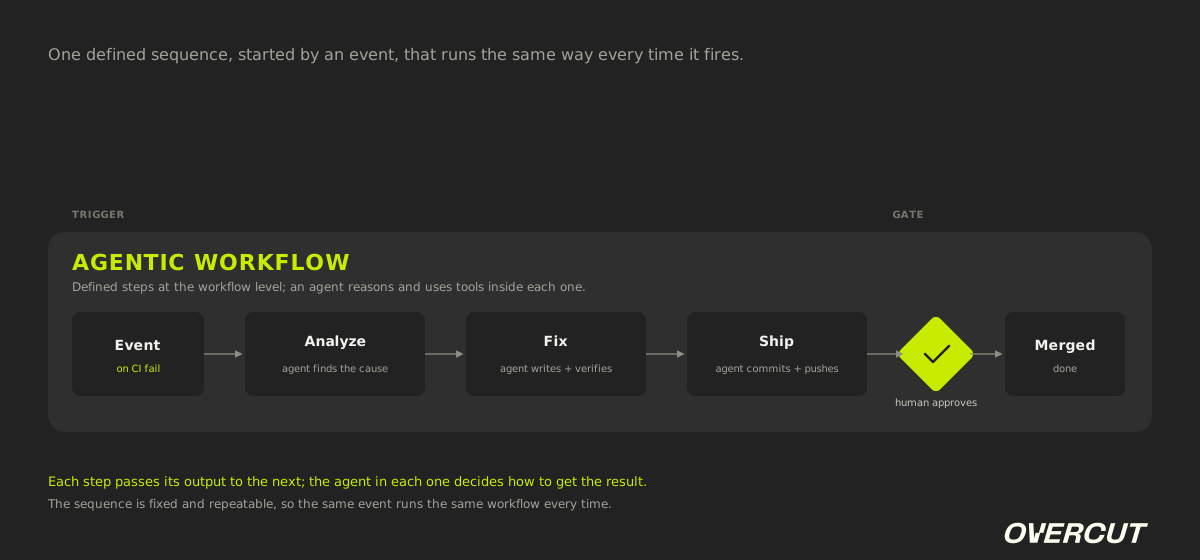
The shape matters. There is a real distinction between a static workflow, where tools are wired through fixed code paths, and an agent, which directs its own process at runtime. An agentic workflow deliberately combines both. The sequence of steps is defined and repeatable, which is what makes it predictable and governable, while each step is an agent that reasons and uses tools to decide how to get its result. Structure lives at the workflow level; autonomy lives inside the steps. Many workflows running together, each owning one concern and reacting to its own triggers, are what orchestration coordinates across the organization.
How it works
An agentic workflow turns a task into a process that runs the same way every time it is triggered. Four properties make it work:
A trigger starts it
The workflow is bound to an event in the systems teams already use. A new ticket, a pull request, a failing build, or a CVE advisory starts the run automatically, so work begins without a person opening a tool and pasting in context.
Defined steps, agent autonomy inside each
The sequence of steps is fixed and repeatable, which is what makes the workflow predictable. Inside each step, an agent reasons, calls tools, and decides how to get the result. You get structure where you want control and judgment where you want adaptability.
Context flows step to step
Each step passes its output to the next. An analysis step's findings become the input the implementation step acts on, so the workflow carries state across the task instead of a person copying results between tools.
Humans approve at the gates
The workflow pauses at defined points and waits for a person before it continues. Agents advance the work; people decide when it is safe to proceed, and every action is recorded against the item that triggered the run.
Example in practice
A pull request opens and its CI run fails on a broken test. Instead of an engineer noticing the red check, reading the logs, and debugging by hand, the failure is an event that triggers a Fix CI workflow. The first step clones the branch. The next is an agent that reads the CI run and job logs, identifies the root cause, and produces a structured fix plan, without touching any code. That plan flows into the next step, where an agent applies the changes, verifies them, commits with a clear message, and pushes to the branch, then comments on the PR with what it fixed. The engineer reviews the result and approves the merge. The same workflow runs on the next failing build, and the next, without anyone re-explaining the task.
What is Agentic Workflow?
An agentic workflow is a defined, repeatable sequence of agent and human steps that automates one software development task end to end, started by an event and run inside guardrails, with autonomous agents doing the work and people approving at the gates.
Comparison: Agentic workflow vs. the Manual agent use
Manual agent use speeds up one developer one prompt at a time, and traditional automation runs fixed steps that break on anything unexpected. An agentic workflow sits between them: the structure of automation with the adaptability of an agent, run inside guardrails.
Automate your SDLC with agentic workflows
Overcut ships prebuilt, configurable workflows that run where work already happens, with autonomous agents doing the work and humans in control at every gate.
Get a demoRelated terms
Related content
By Overcut· 1 min read
Overcut named in the 2026 Gartner® Innovation Insight: AI Software Factories report
By Yuval Hazaz· 15 min read
Context Engineering: The Discipline Behind Reliable AI Agents
By Yuval Hazaz· 10 min read