Agentic SDLC
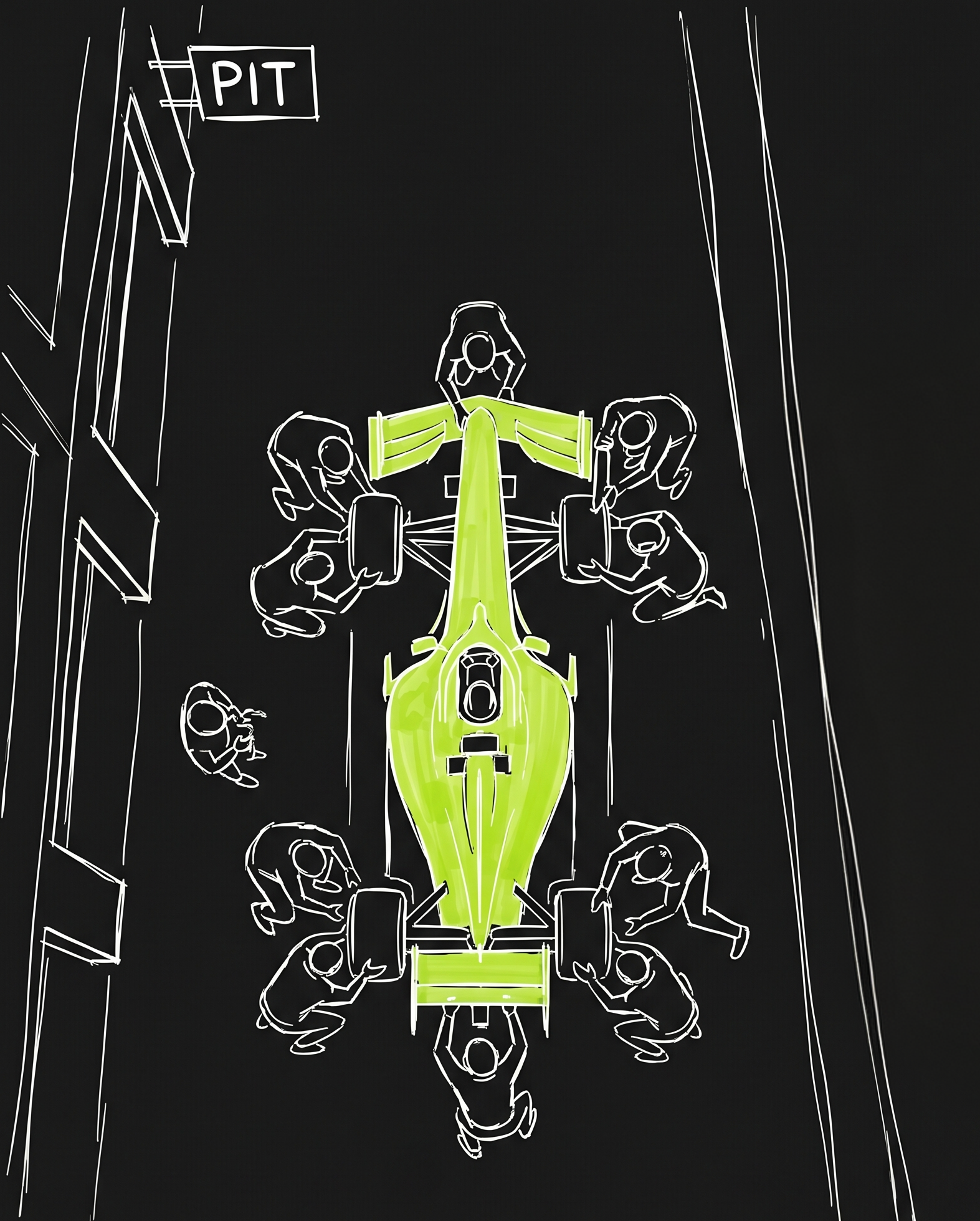
AI coding agents made writing code faster, but the rest of the lifecycle stayed manual. A developer still decides which agent to run, feeds it context, and carries the result to the next tool by hand. That coordination work does not scale as the number of agents and services grows. The Agentic SDLC is what the lifecycle looks like once that wiring becomes an automated system rather than a person clicking between tools.
Overview
The first wave of AI in software development optimized the individual developer. Copilots sped up writing and refactoring code, but the developer stayed the orchestrator of everything around it: choosing what to do next, gathering context, and connecting outputs across steps. Software development is a lifecycle, not a series of isolated prompts, and that lifecycle stayed fragmented even as each prompt got faster.
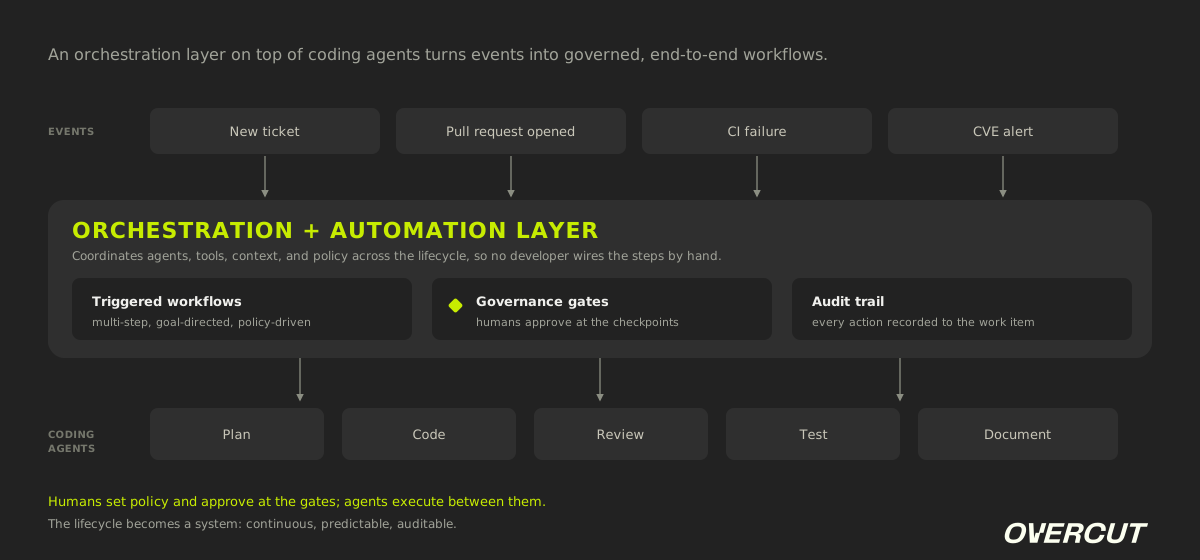
The Agentic SDLC adds the layer that was missing: orchestration and automation on top of the coding agents. Workflows respond to real events, agents carry out the repetitive and analytical work inside each phase, and humans move up to set policy and approve what matters. The shift mirrors what CI/CD did for delivery. Before CI/CD, deployments were manual and inconsistent; afterward they became a standard, automated system. The Agentic SDLC does the same for AI across engineering: it turns ad hoc agent use into predictable, governed workflows that run at the organizational level.
How it works
An Agentic SDLC treats development as a system that agents run and humans govern. Four properties make it work:
An orchestration layer on top of agents
The missing piece is coordination, not intelligence. An orchestration and automation layer sits above the coding agents and connects them, instead of a developer choosing which agent to run and carrying context between tools by hand.
Triggered by real events
Work starts from signals in the systems teams already use. A new ticket, a pull request, a failing build, or a CVE alert kicks off a workflow automatically, rather than a person opening an IDE and pasting in context.
Humans move up the stack
People stop operating every tool and start governing the flow. They define the policies, decide what needs sign-off, and approve at the gates, so autonomy never runs past human judgment.
Continuous, predictable, auditable
Phases connect into one orchestrated system instead of isolated prompts. Every action is recorded against the work item that triggered it, so the lifecycle is something teams can design and reason about.
Example in practice
A customer reports that checkout fails intermittently in production. In an Agentic SDLC, that report is an event, not a developer's cue to start digging. The bug report triggers a workflow: one agent reproduces the failure and runs root cause analysis, attaching its findings to the ticket. A human confirms the diagnosis, then a coding agent opens a pull request with the fix and the regression test. A review agent checks the change against the team's standards before a human gives the final approval to merge. The engineer spends their time on the judgment calls, not on shuttling context between five tools.
What is Agentic SDLC?
The Agentic SDLC is the software development lifecycle run as automated, policy-driven workflows, where autonomous agents carry out lifecycle work inside guardrails and humans stay in control at the decision points.
Comparison: Agentic SDLC vs. the AI-assisted development
The three describe a progression. Traditional development runs on manual effort, AI-assisted development speeds up the individual developer, and the Agentic SDLC automates the lifecycle across the organization while keeping humans in control.
Automate your SDLC with agentic workflows
Overcut adds an orchestration and control plane to your lifecycle, running where work already happens, with humans in control at every gate.
Get a demoRelated terms
Related content

By Overcut· 1 min read
Overcut named in the 2026 Gartner® Innovation Insight: AI Software Factories report
By Yuval Hazaz· 15 min read
Context Engineering: The Discipline Behind Reliable AI Agents

By Yuval Hazaz· 10 min read