ADLC (Agentic Development Lifecycle)
The software development lifecycle has always described the stages work moves through: planning, building, testing, shipping, and maintaining. AI coding agents made the building part faster, but the rest of the cycle stayed manual, with developers deciding which agent to run and stitching the steps together by hand. The ADLC is what that lifecycle looks like when agents take part in every phase, not just code generation.
Overview
The traditional SDLC treats people as the engine of every stage. A developer interprets a requirement, writes the code, opens the review, runs the tests, fixes what breaks, and updates the docs. AI assistants sped up individual tasks inside that model, but the developer remained the orchestrator, choosing what to do next and carrying context between tools. That coordination work does not scale as the number of agents and services grows.
The ADLC reframes the lifecycle as a system that agents and humans operate together. Phases are connected by automated workflows that respond to real events, agents carry out the repetitive and analytical work inside each phase, and humans move up the stack to set policy and approve what matters. The intelligence is not new. What changes is the execution model: development becomes systematic and continuous instead of a series of manual, disconnected prompts.
How it works
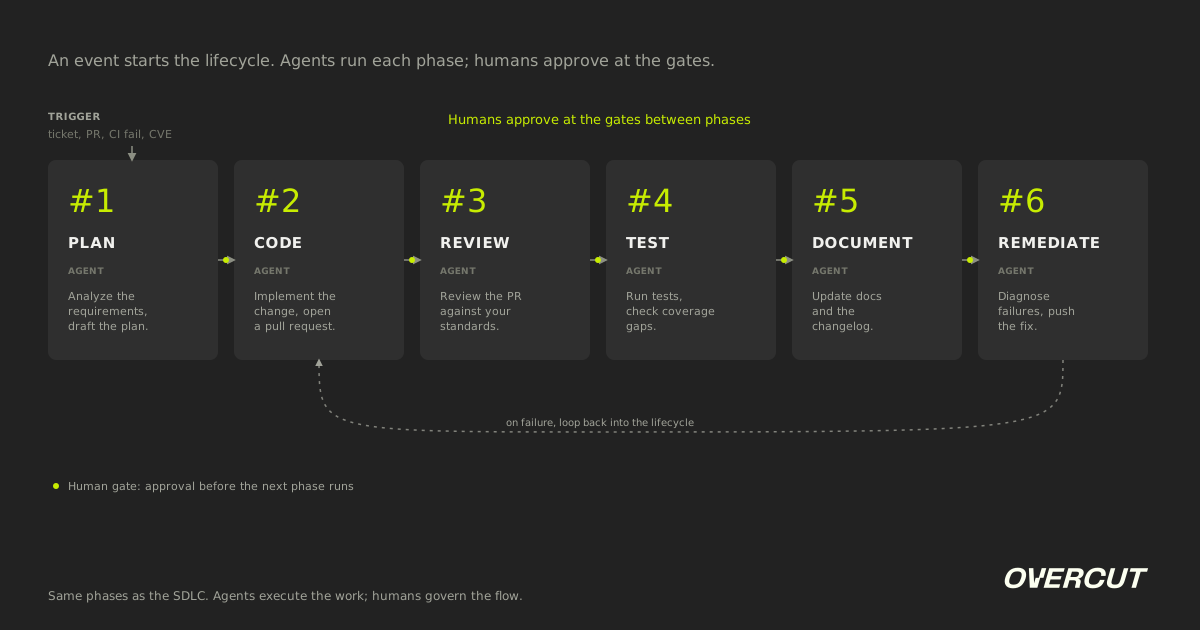
An ADLC turns each lifecycle phase into automated, policy-driven work that agents run and humans govern. Four properties make it work:
Agents across every phase
Instead of AI helping only with code, agents take part in each lifecycle phase: analyzing requirements, planning work, implementing changes, reviewing pull requests, running tests, updating docs, and remediating failures.
Triggered by real events
Work starts from signals in the tools teams already use. A new ticket, a label change, a pull request, a failing build, or a CVE alert kicks off a workflow automatically, with no developer manually selecting an agent.
Humans at the decision points
The lifecycle pauses at set checkpoints for approval. People define the policies, decide what needs sign-off, and review outcomes, so autonomy never runs past human judgment.
Continuous and auditable
Phases connect into one orchestrated flow rather than isolated prompts. Every action is recorded against the work item that triggered it, keeping the lifecycle predictable and traceable.
Example in practice
A product ticket lands in the backlog with a short description and an acceptance criteria checklist. In an ADLC, that intake event triggers a workflow rather than a developer picking up the work cold. One agent analyzes the requirements and drafts an implementation plan for a human to approve. Once approved, a coding agent opens a pull request with the change. The build fails on a flaky integration test, so a remediation agent diagnoses the failure and pushes a fix until CI is green. A final agent updates the changelog and the affected docs to match the change. The developer reviews the result and merges, rather than running each step by hand.
What is ADLC (Agentic Development Lifecycle)?
ADLC, or Agentic Development Lifecycle, is an AI-enabled version of the SDLC in which agents participate across planning, coding, review, testing, documentation, and remediation, while humans stay in control at the decision points.
Comparison: ADLC vs. the Traditional SDLC
The ADLC keeps the same phases as the SDLC; what changes is that agents execute the work and humans shift from operating every step to governing the flow. ADLC and Agentic SDLC describe the same idea.
Run your SDLC as an ADLC
Overcut puts agentic workflows across your lifecycle, from planning to remediation, with humans in control at every gate.
Get a demoRelated content

By Overcut· 1 min read
Overcut named in the 2026 Gartner® Innovation Insight: AI Software Factories report

By Yuval Hazaz· 15 min read
Context Engineering: The Discipline Behind Reliable AI Agents

By Yuval Hazaz· 10 min read