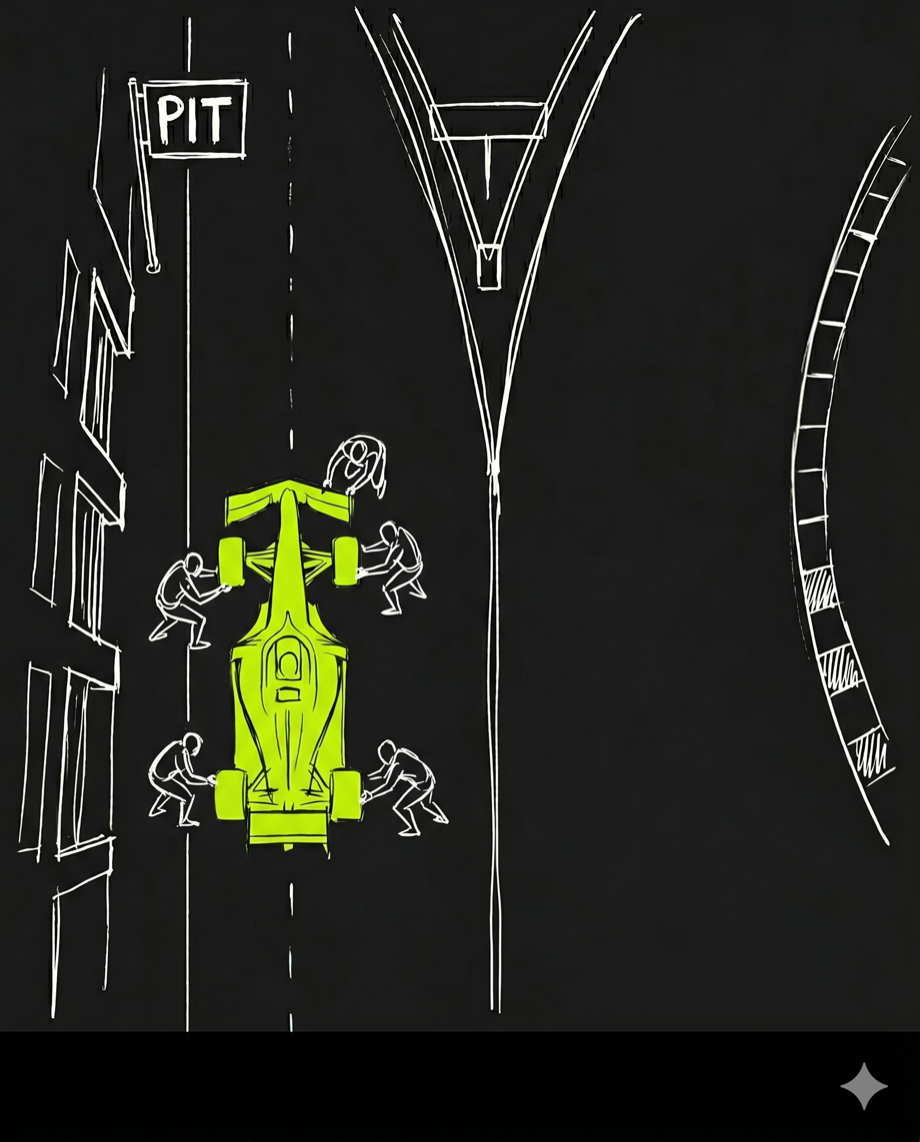
Governance Gates
As engineering teams hand more of the software delivery lifecycle to autonomous agents, the operative question shifts from can an agent do the work to when it should be allowed to. Governance gates are the answer: explicit checkpoints inside an agent's workflow where work pauses for validation, whether automated, human, or both, before it can proceed. They turn an autonomous agent from a black box into a controlled, auditable participant in your SDLC.
Overview
In a traditional SDLC, control points are implicit. A human is in the loop at almost every step, so review, approval, and sign-off happen as a matter of course. When an autonomous agent compresses plan-to-merge from days into minutes, those implicit checkpoints disappear, and with them the team's visibility into what was changed, why, and on whose authority.
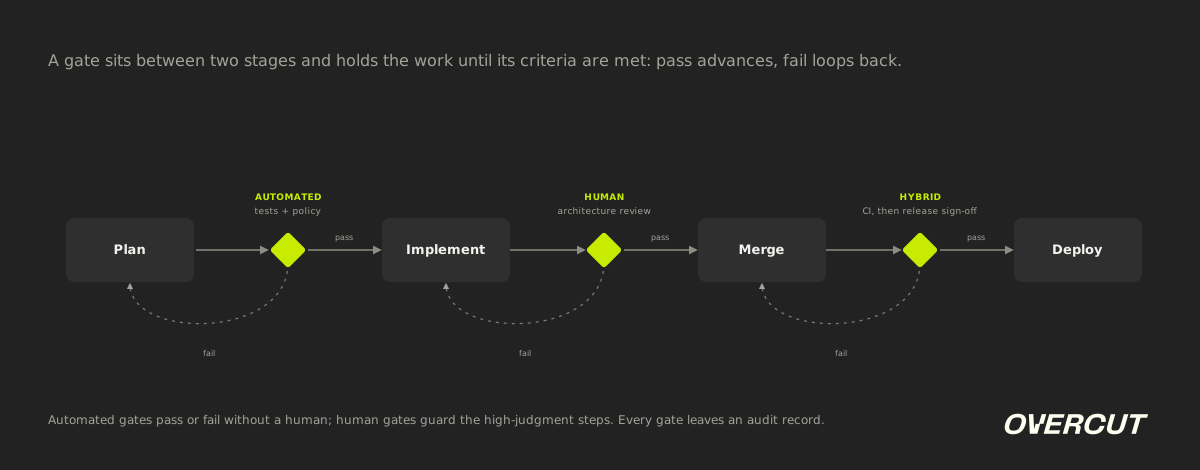
Governance gates put those checkpoints back, deliberately and explicitly. A gate sits at the boundary between two stages of an agent's pipeline: between planning and implementation, implementation and merge, or merge and deploy. Instead of trusting the agent to self-police, the gate makes advancement conditional. The work stops until a defined criterion is met. That lets teams grant agents real autonomy inside each stage while keeping firm control over the transitions that carry risk, with a record of who or what approved each one.
How it works
In practice, a gate sits between two stages of an agent's pipeline and holds the work until its criteria are met. Every gate has three things: an owner (who or what decides), pass/fail criteria, and an audit record of the decision. Teams typically combine three kinds of gate:
Automated gates
Tests, linting, security scans, and policy-as-code that pass or fail without a human. Fast, deterministic, and always on.
Human gates
A reviewer signs off on higher-judgment decisions: architecture, security posture, or a production release.
Hybrid gates
Automated checks run first and, only if they pass, route the work to a human for final approval.
Example in practice
A team assigns an agent a database migration. The agent analyzes the schema, drafts a migration plan, and reaches the first gate, an automated check that the plan compiles against a shadow database and violates no data-retention policies. It passes. The next gate is human: because schema changes are high-risk, a senior engineer must approve the architecture before the agent writes a single migration file. Only after that sign-off does the agent generate the code, open a PR, and stop again at a final CI gate before merge.
What is Governance Gates?
Governance gates are approval or validation checkpoints that control when an AI agent can move work forward in the SDLC. Each gate defines a condition, such as a passing test suite, a policy check, or a human sign-off, that must be satisfied before the agent advances to the next stage.
Comparison: Governance gates vs. the CI/CD quality gates
The three are complementary: guardrails define the box an agent operates in, governance gates decide when it crosses each threshold, and CI/CD quality gates validate the artifacts it produces.
See governance gates in your SDLC
Embed approval workflows at every critical checkpoint, with audit trails built in.
Get a demoRelated content

By Overcut· 1 min read
Overcut named in the 2026 Gartner® Innovation Insight: AI Software Factories report
By Yuval Hazaz· 15 min read
Context Engineering: The Discipline Behind Reliable AI Agents

By Yuval Hazaz· 10 min read