Buy the platform build your product
Homegrown AI orchestration becomes legacy infrastructure from the first commit. The real cost is senior engineers maintaining undifferentiated plumbing instead of shipping product.
Orchestration looks like glue, not a product
It looks like simple plumbing, so teams underestimate it. Easy-to-start and hard-to-run-right are not the same property.
The creeping platform
It starts with one agent. Then model-swapping, permissions, and audit logging. The script became a system you now maintain.
The visibility gap
Teams notice too late. You were building a feature, and you woke up running infrastructure.
Legacy from commit one
The maintenance clock does not start at month six. It starts at the first commit.
You didn't build your CI/CD. Don't build your agentic SDLC.
Source control, CI/CD, observability: the platforms your team runs on are bought, not built. Each is its own infrastructure, demanding dedicated specialists, constant maintenance, and steady innovation to stay current. Agentic SDLC orchestration is that same kind of infrastructure, not a side project.
Build vs buy, side by side
The hidden cost of building it yourself
Where your engineering attention compounds
Vendor-agnostic
Works alongside your existing stack instead of forcing a rip-and-replace.
Pre-solved hard problems
Governance, audit, and cross-system depth are already built and proven.
Velocity
Get value now while a DIY team spends 6 to 18 months reaching production.
Focus on your moat
Your moat lives in the product, not in orchestration plumbing.
One platform, not ten point tools
A tool for code review, another for testing, another for docs. Each siloed, each with its own setup, context, and bill. Overcut runs all of them as orchestrated workflows on one platform that shares context, governance, and models.
- Code review
- Testing
- Doc updates
- Ticket triage
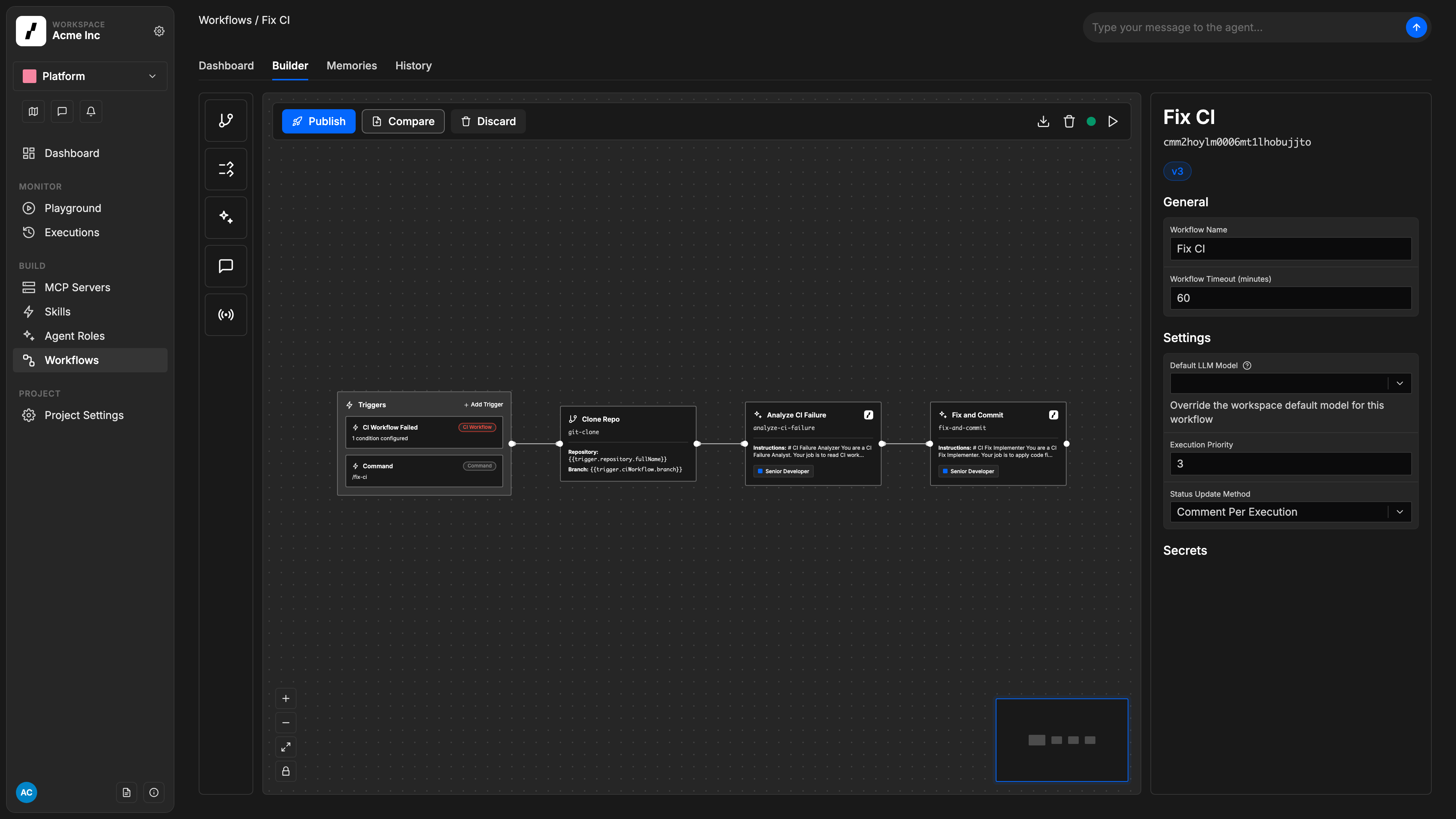
- CI fixes
- CVE remediation